Is a Katana Legal in 2026 Global Laws Ownership Import Guide
Can I Legally Own or Import a Katana in 2026
Katana legality and sword ownership laws are confusing for many martial arts enthusiasts collectors and sword hobbyists With constantly evolving weapons regulations understanding katana legal status katana ownership laws by country and international sword import rules in 2026 is essential before buying owning or transporting a katana
This 2026 updated global guide breaks down the most important legal considerations for katana collectors around the world
1 Global Overview Katana Legal Status in 2026
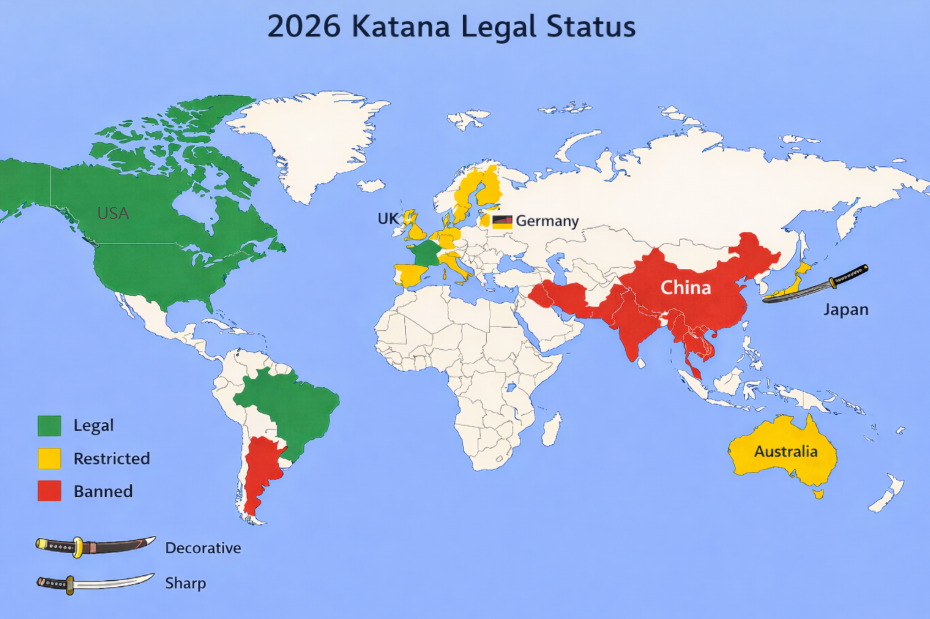
Worldwide laws about owning importing or carrying a katana generally fall into three categories
Fully Legal Ownership
Some countries allow civilians to own katana without major restrictions as long as you meet age requirements and store the sword responsibly
Restricted Ownership or Import
Many regions permit sword ownership but impose regulations on carrying in public blade sharpness length and import documentation
Banned or Heavily Prohibited
Certain nations outright ban civilian possession of sharp weapons including katanas or require special permits and stringent controls
Key legal factors affecting katana legality include
Whether the blade is functional or decorative
Blade length and overall design
Local definitions of weapon versus collectible
Licensing registration and customs requirements

2 Katana Ownership Laws by Country 2026 Update
United States
In most of the United States owning a katana is fully legal for adults There is no federal prohibition on sword ownership but state and local laws vary especially about public carry and transport
Important points
This includes licensing free ownership in most states
Some states limit blade length or have specific carry restrictions
Public display and open carry usually require a lawful purpose such as dojo transport
United Kingdom
The UK restricts sale and possession of curved swords over 50 centimeters unless they qualify for exemptions such as being traditionally handcrafted or used for martial arts and reenactment
Customs and law enforcement interpret sword laws strictly so importing or owning a modern factory made katana without proper paperwork can be tricky
European Union and Major EU Countries
Katana legality varies within EU nations
Germany ownership is legal but carrying in public is restricted
France legal to own public carry needs authorization
Italy ownership typically legal police registration may apply
Spain legal ownership transport and public handling are regulated
Canada
Katana are classified as bladed weapons and generally legal to own Public carry is restricted unless you have a legitimate purpose such as martial arts training or travel to dojo
Australia
Australian katana laws are complex and differ by state In several regions owning or importing sharp swords requires special permits or club membership
Japan
Japan has some of the strictest sword policies in the world Functional katanas typically must be registered with authorities and unregistered possession is illegal
Other Regions
India and Mainland China sharp swords are generally prohibited
South Africa sword ownership is usually legal though public carry restrictions apply
Middle East and Asia laws vary widely customs often assess import eligibility on a case by case basis
3 Decorative versus Functional Katana Legal Differences
One of the most vital distinctions in sword law is whether your katana is decorative or functional
Decorative Katana
Easier to legally own and import
Usually categorized as collectibles or wall art
Still may face transport and import restrictions in certain countries
Functional Katana
Treated as a weapon in many legal systems
May require permits registration or be banned outright
Often subject to restrictions on carry and import controls
4 How to Legally Buy and Import a Katana in 2026
If you plan to buy and import a katana internationally follow these steps to ensure compliance with local and global sword import laws
Research local sword legislation Understand the specific laws in your country or state before purchase
Choose legal blade types Select decorative versions or legally compliant functional swords
Declare at customs Swords often require accurate customs descriptions to avoid seizure
Use experienced sellers Buy from reputable vendors familiar with international sword import regulations
Following these precautions reduces the risk of confiscation fines or legal trouble
5 FAQ Common Katana Legal Questions
Can I carry a katana in public
Almost universally no Even where ownership is legal public carry or brandishing a sword is restricted and may require specific justification or be prohibited
Are antique katanas exempt from laws
In some jurisdictions antiques may enjoy cultural exemptions but owners often need documentation proving age and origin
Conclusion Responsible and Legal Katana Ownership
Owning a katana in 2026 can still be legal but understanding nuanced global laws is crucial Whether you are a martial artist collector or enthusiast always verify up to date katana laws including katana legality by country ownership regulations and import requirements before buying owning or transporting any sword
Stay informed respect local regulations and enjoy collecting this iconic symbol of heritage safely and lawfully
-
Posted in
other
